
When Should Your Child Have an Orthodontic Evaluation?
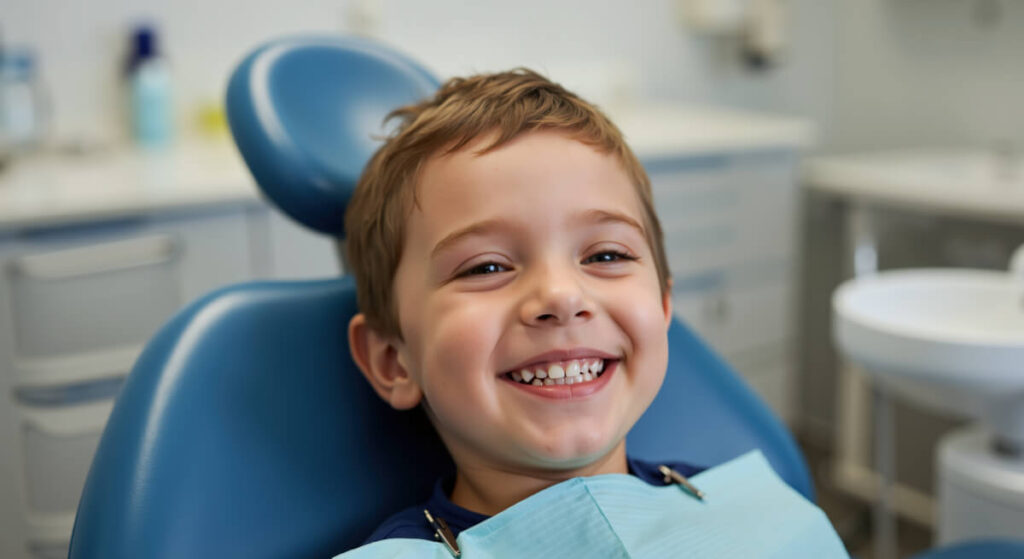
Most orthodontists, including the American Association of Orthodontists, recommend a first orthodontic evaluation around age 7. A visit at that age doesn’t mean your child needs braces. It gives a specialist a chance to see how your child’s teeth and jaws are growing.
If you’re a parent in Summerlin wondering whether it’s time, you’re in good company. Many families ask this question when baby teeth start falling out and adult teeth arrive. This post explains what an orthodontist looks for, why age 7 is a common starting point, and what happens if your child doesn’t need treatment yet.
Why do orthodontists suggest an evaluation around age 7?
By about age 7, most children have a mix of baby teeth and permanent teeth. An orthodontist, a dental specialist who focuses on how teeth and jaws line up, can see how the first permanent molars and front teeth are coming in. That mix gives helpful clues about what’s ahead.
Some concerns are easier to spot while a child is still growing. Others can be watched over time. An early look helps you and your orthodontist plan together.
What does an orthodontist look for in a growing child?
An evaluation is a gentle, hands-on look at your child’s smile and bite. Your orthodontist may check for:
- Crowding, when teeth don’t have enough room to fit comfortably
- Spacing, when gaps are larger than expected
- Bite differences, such as a crossbite (some upper teeth sit inside the lower teeth) or an overbite (the upper front teeth overlap the lower ones a lot)
- Jaw growth, including whether the upper and lower jaws are developing in balance
- Habits, such as thumb sucking, that can influence how teeth and jaws develop
- Timing of tooth loss, when baby teeth come out earlier or later than expected
- Breathing patterns, such as snoring or mouth breathing, which can be linked to how the jaws and palate are growing
You’ll leave knowing what your orthodontist sees and what it may mean for your child.
How does jaw growth affect my child’s breathing?
The shape of your child’s jaws, palate, and face affects how much room the tongue has and how easily air moves through the nose and throat, especially during sleep. When the jaws are narrow, the tongue is tied, or the tonsils are enlarged, growth can head in an unhealthy direction and breathing can suffer. That can show up as poor sleep, daytime fatigue, and behavior that looks like inattention.
Because jaw and facial growth is guided most easily while a child is still growing, an early evaluation gives your family the most options. That’s one more reason we recommend a first visit around age 7. Signs worth mentioning at your child’s visit include:
- Snoring, noisy breathing, or pauses in breathing at night
- Breathing through the mouth, day or night
- Crowded teeth or a narrow palate
- Teeth grinding
- Daytime tiredness, hyperactivity, or trouble focusing
None of these prove there is a problem on their own, but several together are worth a conversation. Our doctors have more than 20 years of experience evaluating children’s airways. Learn more about airway and breathing evaluations.
Does an early visit mean my child needs braces?
No. Many children visit, get a clear picture, and go home with no treatment plan at all. Some return for periodic check-ins as they grow.
Others may benefit from early treatment, sometimes called Phase 1 treatment. This is a shorter first stage of care, often in the elementary school years, that addresses specific concerns while a child is still growing. It doesn’t suit every child, and a specialist can tell you whether it makes sense for yours. You can read more about early orthodontic treatment on our site.
Recommendations depend on your child as an individual. We never assume a child needs treatment because of their age.
What if my child is older than 7?
You haven’t missed anything. Teens and adults benefit from evaluations too, and treatment options exist at every stage of life. An orthodontist can look at where your child’s teeth and jaws are today and talk through the choices.
Depending on the patient, those choices may include braces or Invisalign, which uses a series of clear, removable aligners to move teeth. Whether either one fits comes down to your child’s needs, goals, and lifestyle.
Why see a specialist for an orthodontic evaluation?
Orthodontists complete additional years of training after dental school focused on tooth movement and jaw growth. That specialty focus matters when you want to understand what is normal for a growing child and what deserves a closer look.
At Chenin Orthodontic Group, Dr. David Chenin and Dr. Stephen Chenin are both certified by the American Board of Orthodontics. That certification is a voluntary step beyond licensure. It generally involves a written exam, a review of treated cases, and periodic renewal. You can learn more about our doctors on our site.
What is a first visit like for kids in Summerlin?
Families in Summerlin and across the Las Vegas Valley often tell us they worry a first visit will feel clinical or scary. We work to make it feel welcoming. We’ve cared for Southern Nevada families since 1978, and we know that a relaxed child makes for a better visit.
At your child’s evaluation, your orthodontist will look at your child’s teeth and bite, talk with you about any concerns, and explain what they see in plain language. Our team uses advanced 3D imaging and digital treatment planning when it helps with an individual case. You can read what to expect on our new patients page.
Our Summerlin office is a convenient choice for many local families, and we also see patients at our Henderson location. Both Dr. David Chenin and Dr. Stephen Chenin see patients at both offices, and both offices serve kids, teens, and adults.
Frequently Asked Questions
What age should a child see an orthodontist?
Around age 7 is a common recommendation, since that’s when a mix of baby and permanent teeth usually appears. Children can be seen earlier if you or your dentist notice something, and older kids, teens, and adults are always welcome too.
Will my child need braces after an early evaluation?
Not necessarily. Many children only need to be monitored as they grow. If treatment is advised, your orthodontist will explain what it involves and why, and you can decide what’s best for your family.
Can an orthodontist help if my child snores or breathes through their mouth?
An orthodontist can evaluate how your child’s jaws and palate are growing and whether they may be limiting breathing space. If you’ve noticed snoring, mouth breathing, or restless sleep, mention it at your child’s evaluation. You can read more on our children’s airway page.
Do I need a referral from my dentist?
Many families come on their own, and others come at their dentist’s suggestion. Please check with our team when you reach out, and we’ll tell you how to get started.
Is orthodontic treatment uncomfortable for kids?
Some soreness is common when teeth begin to move, especially in the first days after an adjustment. Most children adjust well. You can read about how we approach comfort during treatment on our site.
How can I find out about costs and payment options?
Our team is happy to talk through costs with you. You’ll find details on our financial and insurance page.
Ready to Take the Next Step?
If you’re curious about how your child’s smile is developing, we’d love to meet you. Reach out to our team to schedule a consultation at our Summerlin or Henderson office. You’ll get clear answers, a friendly welcome, and a plan that fits your family, whatever the timing.